
Supporting Autistic employees in the Workplace: What employers need to know
At Strawberry Field, we believe that everyone deserves the opportunity to thrive in the workplace. Our Steps at Strawberry Field programmes are designed to empower young people experiencing barriers to employment Strawberry Field and that mission doesn't stop at our gates. Creating truly inclusive workplaces requires employers to understand the challenges autistic people face every day and to take meaningful steps to address them.
Autism is a spectrum and no two autistic people are the same. But there are common barriers in recruitment, in the physical environment, in communication and in culture that can make the workplace a difficult and exhausting place to be. The good news is that many of these barriers can be removed with relatively simple changes. Here's what employers need to know.
Inaccessible recruitment processes
Job applications and interviews are rarely enjoyable, but they can be particularly difficult to navigate for autistic people. Many job adverts call for 'excellent communication skills' or 'team players': descriptors that autistic candidates may not use to describe for themselves, even when they are fully qualified for the role. Interviews, too, often place greater emphasis on social performance than on actual job skills.
How can employers help?
- Provide interview questions in advance
- Offer reasonable adjustments
- Look beyond perceived social skills
Sensory overload
Fluorescent lighting and noisy open-plan offices can be distracting for any employee, but for autistic people, they can trigger sensory overload and a fight-or-flight response. Bright lights, strong smells and loud noises can cause meltdowns, shutdowns and, in some cases, physical pain, making it important for employers to reduce environmental stimuli wherever possible.
How can employers help?
- Allow employees to wear noise-cancelling headphones
- Dim lighting where possible
- Provide access to quiet rooms or low-stimulation spaces
Masking and burnout
Masking is a common part of the autistic experience. Many autistic people, but women in particular, face significant societal pressure to 'fit in', and will work hard to conceal their true selves in order to appear neurotypical. Over time, this is exhausting and can lead to burnout, anxiety and depression.
How can employers help?
- Empower autistic employees to be themselves at work
- Hold regular wellbeing check-ins with all employees
Communication styles
Miscommunication is sometimes unavoidable, but in workplaces that rely on office jargon and idiomatic phrases, it can become a daily challenge for autistic people. Constantly deciphering indirect language or asking clarifying questions adds an extra cognitive load that can be both frustrating and tiring. Equally, autistic individuals may come across as direct, prefer to skip small talk, or want to discuss their interests in depth. It is important that these are recognised as communication differences, not rudeness.
How can employers help?
- Give clear, straightforward instructions and provide them in writing
- Offer a range of communication channels, such as Microsoft Teams or email
- Don't mistake directness for poor manners
Lack of understanding
One of the biggest barriers autistic people face at work is a lack of understanding from neurotypical colleagues. Autism is not a monolith, so it is important not to make assumptions based on stereotypes. That said, there is a great deal employers and colleagues can do to ensure autistic people feel genuinely supported and included.
How can employers help?
- Provide Neurodiversity in the Workplace and Unconscious Bias training
- Actively foster an inclusive workplace culture
- Take reports of bullying and discrimination seriously
Looking to take the next steps to becoming a more inclusive employer? Find out more about how Strawberry Field can support your organisation.
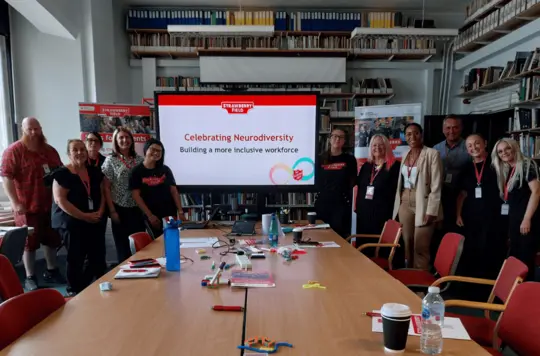
Neurodiversity Awareness Training
Explore key neurodivergent conditions, understand how neurodiversity shows up in everyday and workplace contexts and learn practical strategies to support inclusion.

Employment Partners
Empowering young people facing barriers to employment while helping you build a more inclusive, sustainable workplace.