
How to deal with career rejection
Rejection is a normal, albeit horrible, emotion. Nobody likes to hear ‘no’, especially when it comes to employment. But rejection happens to everyone, and it’s important we learn how to deal with the emotion and negative feelings it brings up.
Rejection after applying for a job
It can be disheartening when you send off a job application only to be told the company will not be moving forward with your application, or worse still, get no response at all. Keep in mind that businesses are likely receiving hundreds, if not thousands of applications, when often there is only one role available. The Jacaranda Liverpool recently advertised a sale position in their record store and had to close the applications early after receiving over 500 applicants.
How to deal with it:
- Remind yourself, it’s not personal! The employer hasn’t even met you, so this rejection is not based on you as a person. It’s far more likely that the employer has found an applicant that suites their criteria slightly better or has a touch more experience – and that’s okay!
- Reflect on the experience. It’s unlikely at this stage that the employer will be able to offer any personalised feedback, but it’s worth going over your own application alongside the job specification. Be honest with yourself: were there gaps, or could your examples have been stronger?
- Consider what you might do differently. When you are just one of a sea of applicants, it can be hard to stand out. Think about what might get you noticed by an employer. Instead of just sending a CV, can you write a cover letter that showcases your skills and personality? Could some volunteering give you an edge?
Rejection after a job interview
Rejection after a job interview feels rubbish. Maybe you knew the interview wasn’t going well as it was happening, or you might have felt that you aced it, only to be told you haven’t got the job. Whatever happened, there’s no denying that rejection after an interview feels deflating.
How to deal with it:
- Allow yourself to feel whatever emotions you are feeling. Rejection is disappointing! It’s normal to feel sad and frustrated. Take some time to process and prioritise things that make you feel happy.
- Ask for feedback. It may be that the person they hired has 12 months more experience than you, and had they not applied, you would have got the job! Or there may be specific things that the employer was looking for that you didn’t demonstrate in your interview. Whichever it is, this is good information to have and will better prepare you for your next interview.
- Chalk it up to experience! Every interview teaches you something: a new format, different questions, a better sense of how you handle pressure. Even without the job, you leave better prepared for the next one.
Rejection after a trial shift
Getting to a trial shift means you've already stood out, so being told no afterwards can feel harder to shake off than an early rejection. You've had a taste of the job, maybe even started picturing yourself in it, which makes the letdown bigger.
How to deal with it:
- Remember a trial works both ways. It's not just about whether you were good enough, it's also about fit. Maybe your pace of work suited a different kind of shift, or the team was looking for someone with a specific skill you'll pick up elsewhere.
- Ask what stood out, good and bad. Employers are often more willing to give specific feedback after a trial than after an interview, since they've seen you in action. Ask what you did well and what held you back. Both are useful.
- Don't let it knock your confidence for the next one. Getting to trial stage at all is proof you can get through applications and interviews. That skill doesn't disappear because one placement didn't work out.
Where to get support
You don't have to process rejection on your own. If you're part of Steps to Work, your Employment Development Coach is there to talk things through, help you make sense of feedback and figure out what to try next. You can also speak to your friends and family, who will have experienced the exact same feelings that you are now. Sometimes just saying it out loud to someone else makes it feel more manageable.
How Steps to Work can help
One of the key benefits of being a Steps to Work trainee is the opportunity to be introduced directly to our employer partners. We can make those connections on your behalf and tailor your application to the employer and role, giving you a stronger chance of standing out.
Rather than relying solely on the standard application process, we can often help you get directly in front of employers through work experience opportunities or interviews. This gives you the chance to demonstrate your skills and potential beyond what's written on your CV.
We also provide personalised feedback on your CV and job applications, helping you improve them over time and build the confidence and skills needed to make successful applications independently in the future.
Steps to Work
A programme for young adults with learning difficulties or other barriers to employment.
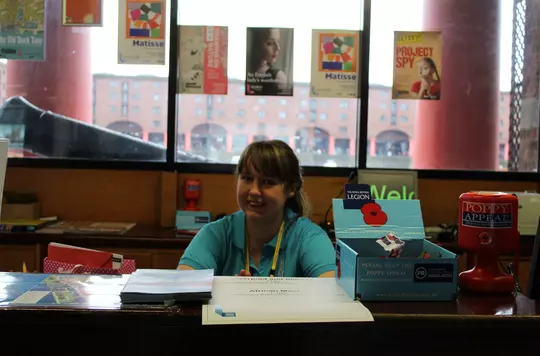
How to overcome interview nerves | Strawberry Field's guide for young adults
Struggling with interview nerves? Discover practical tips to build confidence, prepare effectively and succeed in job interviews.